Introduction
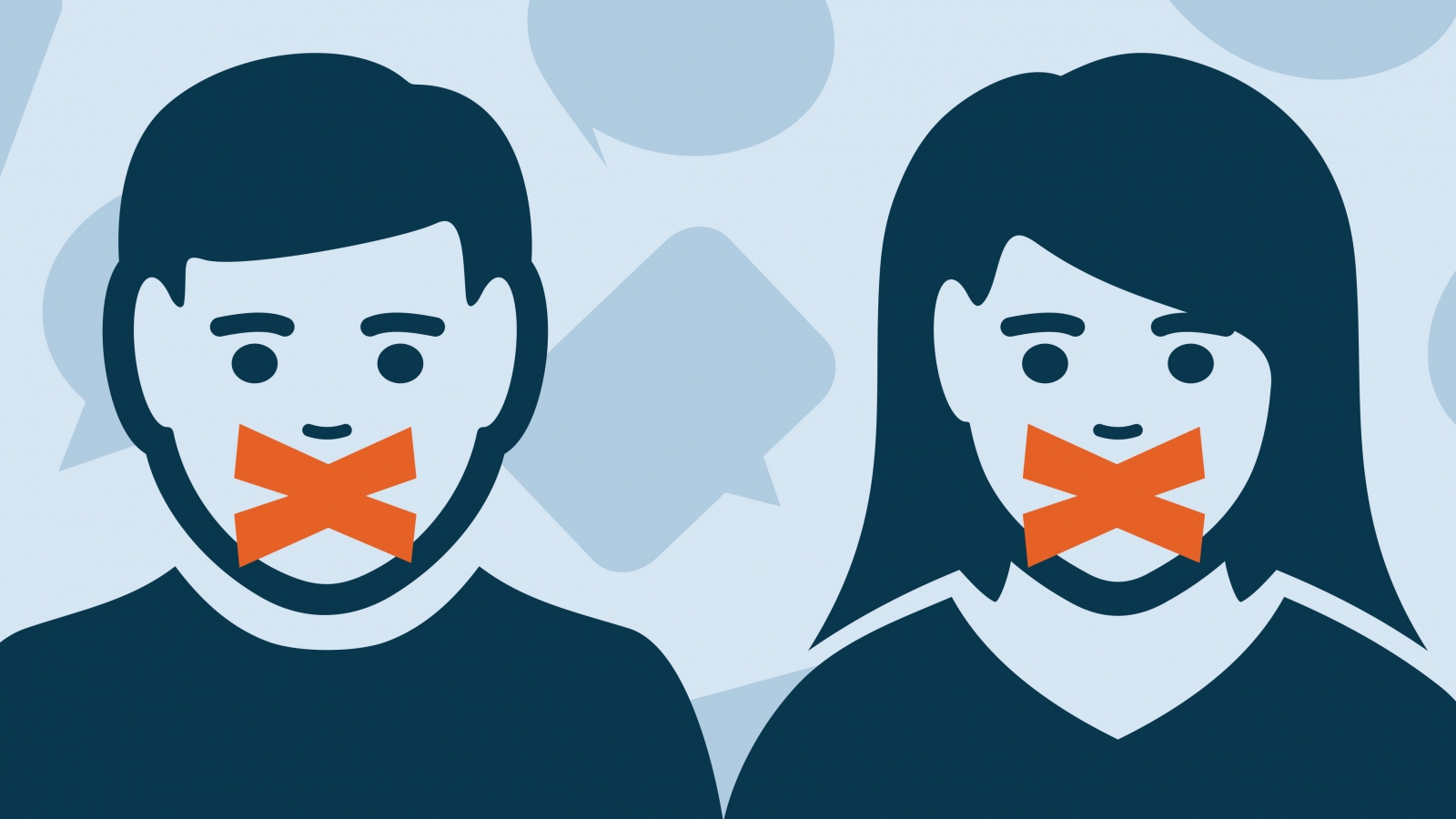
By censoring controversial ideas on campus, universities have made themselves the subject of controversy. Historically, universities have been thought to represent the very idea of freedom of speech since it is a prerequisite for academic rigor. Nowadays, this academic integrity is being challenged by both university administors and students. Many universities have practices and policies that stifle free speech, namely bias reporting system, trigger warning, free-speech zone, and most infamous of all, speech ban. The Foundation for Individual Rights in Education found that 32.3 percent of the surveyed 461 institutions in the United States have ‘speech codes that clearly and substantially restrict freedom of speech’ in 2018. Only 35 institutions received the highest rating for free speech. Academic freedom is under serious threat, and it is in the entire society’s interest to preserve it.
This essay serves as a defence of free speech on university campuses. It will start by examining the role of universities in society and universities’ responsibility to students, discuss how administrators and students choose what is worth censoring, then offer some rebuttals to common arguments made by the so called ‘no-platform’ advocates.
The purpose of universities
A reminder is due for the academic world, that the purpose of universities is to advance human progress. This requires the free expression of ideas, however controversial and outrageous, and the open debate that follows. An idea that is not heard cannot be challenged, and this is dangerous because debates stimulate and provoke thoughts. Open debate is the best way to refute wrong ideas and put forward the truth. Without it, the engine of fostering ideas and the expansion of human knowledge are severely impeded.
Universities have a second purpose, that is to educate their students. By stifling free speech, universities are working against this objective. It is important for students to hear offensive ideas; this is the best way to equip them to defend themselves, fight for their beliefs, and engage in meaningful, rigorous debate. Students need the opportunity to learn how to peacefully and vocally fight against the ideas of which they disapprove, and to promote the ideas they stand for. University is the best place for students to train their faculty of critical thinking, and it is unethical for universities to deprive students of this opportunity.
An argument put forward by those in favour of speech restriction is that students should be protected against hateful speeches. This is a mistake. Protecting students will make them unprepared for hateful speeches in the real world, once they leave universities. Instead of shielding them from offensive ideas, they should be exposed to those ideas, so as to develop their strength in logical argument. Some people also hold the view that students have the right to choose whom they do not want to hear. Indeed they have the right; they can simply not attend the speech. If students were forced to attend, then their rights were being violated. However, students are never forced to attend, and they have the freedom to not attend, hence no right is being violated.
Biases are also created by reducing free speech. By choosing which speakers are banned on campus, universities are making a statement about which ideas are not worthy. On the contrary, hosting does not mean endorsing, provided that the speaker is invited by students, not the university administration or faculty. Another example is trigger warning. Trigger warnings effectively communicate to students that certain ideas are supposed to be offensive, building bias within students even before they get a chance to view the material themselves, and eliminating the opportunity for students to make their own judgement. This is alarming, because universities are telling students what should be offensive to them, instead of students making their independent assessments about what they think of the material.
Who decides what to censor?
When people try to ban an idea or speaker on campus, they often cite the idea’s offensiveness to justify their resolve. The problem is that the meaning of ‘offensive’ is highly subjective, arbitrary, and ambiguous. Everyone has a different understanding of what constitutes ‘offensive’, and no one should have the authority to define it for all. In fact, ideas that challenge conventional wisdom and the status quo are most likely discomforting. Many ideas that are valued today were once deemed outrageous, and even illegal. Examples are abundant, such as gender and racial equalities, LGBTQ rights, and Galileo Galilei’s Heliocentrism. If history gives any lesson at all, it teaches that it will be ignorant of us to say some ideas are not acceptable, because what is common belief today may be heresy in the future, and vice versa.
The effects of hateful speeches
Typical examples of ideas banned on campus are racism, jihad, and fascism. The list goes on, but some expect a mere word such as ‘hateful’ is enough justification for censorship. This is not the case, for many reasons.
Advocates for censorship maintain that allowing far-right speakers on campus enables them to mobilise a large group of illiberal supporters. This may very well be the case, but who says banning the speaker does not have the same effect? When a speaker is banned, it goes into the news, which gives a larger platform to the speaker to attract attention, hence gather more followers. A speech ban is counter-productive in that it gives the speaker the attention they seek. It potentially makes the speaker a free-speech martyr, which will further draw sympathetic audience.
The most effective way to fight ideas with which you disagree is not to forbid it. It is to engage the speaker and start a free and open debate. Use logic and evidence to rebut and construct convincing arguments to support. Not only does this give you a chance to refute and defeat your opponent, it also helps you make your case to a wider audience, hence undermining the speaker’s intent of acquiring followers.
Furthermore, the argument is made that hateful speeches lead to violence. This essay agrees that violence has no place on university campus, hence speeches that actively promote violence should be banned. Non-violent speeches, despite being offensive to some, should be allowed. Security reinforcement should be present at controversial speeches, and audience who cannot restrain from violence should be banished. The urge to resort to violence is the reason we have rules and laws. The fact that violence may occur due to people’s passion about an idea is not a sufficient reason for banning the idea. Soccer matches sometimes result in violence between fans; should we ban soccer?
It must be emphasized that free speech does not mean absolutely all speech. Incitement of violence, and libel and slander, should not be tolerated. However, if the speaker is discussing race, religion, or politics in a peaceful, thoughtful, objective, reasoned and rigorous manner, they should be encouraged. However controversial they are, the free exchange of ideas must be protected and welcomed.
Conclusion
Ensuring free speech on campus is imperative and essential to the continued progress of humankind. Universities must realise the purpose of their existence and strive towards it. This should be of concern to every member of society as ideas are fundamentally what set humans apart from other species. We must not fall into the trap of dictating which ideas are worth deliberating and which are off limit. The only effective way to fight for your stance is to fight, not avoiding the fight. For the benefits of human, ideas ought to be free.

 bigWU
bigWU 